Son of the Soil Who Single-Handedly Eradicated the Menace of Prostitution from Kashmir
Mohammad Yousuf Taing
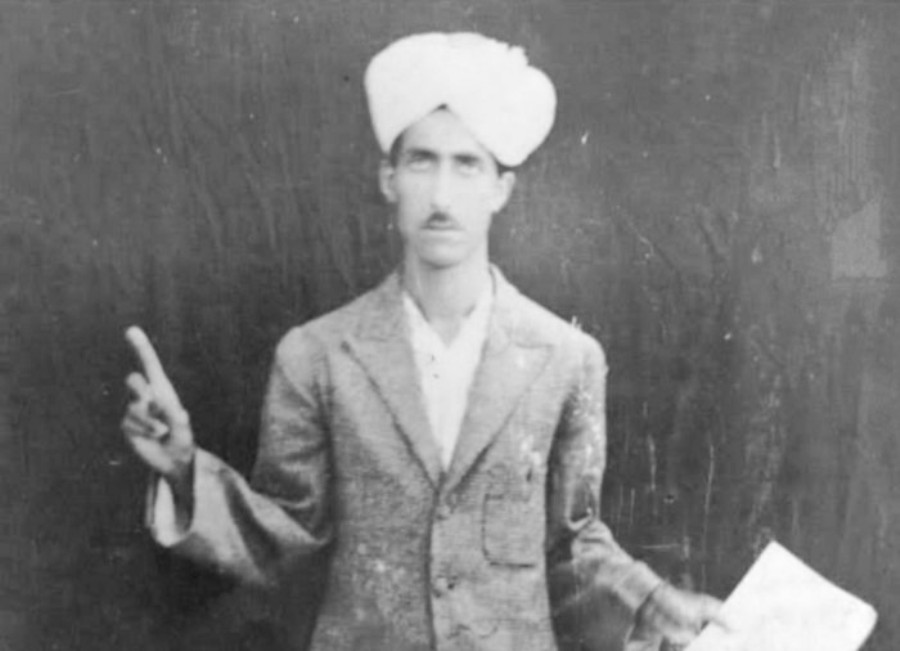
Sahibaan, Qadardan, I am F.A Pass, Wullar Cross, for Kanjars [amoral], Dup daas [apocalypse]. I am Subhan Hajam. And this is my newly created pill. If someone has a stomach ache, ‘Abs seit kheyiw – take with water.’ If there’s pain in the back, , ‘Abs seit kheyiw – take with water.’ If there’s a headache, , ‘Abs seit kheyiw – take with water.’ It has the cure for every ailment. Just by taking one pill, if you survive, ‘Hasto.’ Otherwise, if you die, ‘Na-hasto.’
These sentences were the creation of Muhammad Subhan Hajam alias “Subla Naevid,” owner “Prince Hair Cutting Salon and Hamam,” near Tangah Ada, close to a Palladium Talkie, Srinagar. The era was around 1956 or 1957. In those days, under the supervision of the Anjuman-e-Nusrat al-Islam, an Islamic educational institution Model School Amira Kadal was being run, where I was a primary class student. It was a routine that during the third period, my mind would divert from the classroom to the assembly of people near the Tangah Stand, where Subla Naevid would congregate people through his satirical verses.
“Gentlemen, I hold an F.A. degree, and now I will show you all the letters written to me by prominent leaders, princes, ministers, deputies, and scholars from all over India. Here is a letter from Rabindranath Tagore sent to me. I had sent him my medicine and he has written a letter of gratitude. This letter is from Minister Janki Nath, this one is from Tipu Sultan, and this one is from Mr. Lawrence.”
People, with great enthusiasm, would listen to him. Then he would spread a bundle of postcards, envelopes, and colorful papers in front of them and say:
Oh, simpletons! It seems that your intellects too have been purchased by Gulab Singh Dogra. How naive you are! I swear by the God who created you and me. I have brought these letters from the heap of rubbish on the road. How could Tagore write to me? Tipu is long dead. I have brought them to befool you exactly the way the quacks selling fake medicines rob simple-minded villagers.
Slowly, his pitch would spike.
So gentlemen, I am grateful to you for helping me eradicate the menace of flesh trade from this valley of Sufis and saints. Thank you for your cooperation. I want you to remain by my side so that I could get those ruthlessly shameless pimps out of our homeland.
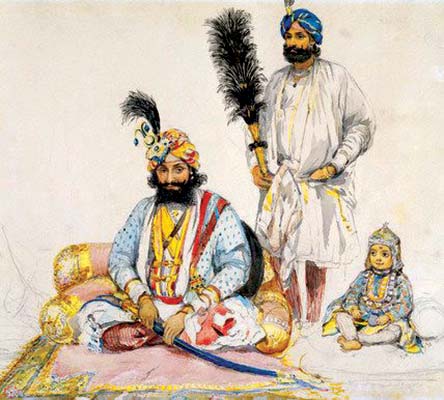
Maharaja Gulab Singh- also known as the Man who Purchased Kashmir and Kashmiris.
He would then start narrating the tale of the injustices inflicted by Gulab Singh Maharaja and his family in such a painful manner that a storm of hatred against the Dogra rule would rise even in the hearts of we children. We would wish to attack the towering structure of Sher Gardi on the banks of Jehlum river and bring it down brick by brick.
We wanted to tear apart the tall portraits of Colonel Maan Singh and Gulab Singh adorned in the museum and set ablaze the Tara Niwas situated at Gupkar Srinagar. But then, all of a sudden Subhan Hajam, by playing the drum, would add a touch of humor, sprinkling jokes, which, upon hearing, would cool the simmering lava of our hearts.

This was the time when the busiest market of Srinagar, i.e., Badshah Chowk, and its surrounding areas would resonate with the hustle and bustle of Street Vendors, Quacks, Tricksters, Tangewalas, and Farmers from distant villages. Today’s Badshah Chowk was called Tangah Adda, and Badshah Bridge was called Ghat Ishaq Khan. In the middle of the market square was a five-foot-high water tank, where horses were being taken for drinking water. Large pipes were inserted by the municipality to pour water into the tank. Tangewalas coming from various routes would gather around this tank, and from here, they would set off to every corner of the valley.
In the midst of the bustling market, the tolling of bells, the blowing of horns and the beatings of drummers would dominate the scenes. Amid such a scenario, there were tricksters like Rajah Yaqub Khan, Dard Ghafur Khan, and Ahmed Bazigar. These people, by showing various tricks of snakes, mongooses, and different skills of playing card games, would amaze peasants and onlookers, creating a market for their concocted medicines. In their assemblies, one could hear various stories. They would utter extremely lewd verses that a person even with a streak of dignity would never utter.
At the onset, I would mistake Subhan Hajaam with these storytellers. However, as I grew older, I heard stories of bravery and courage from him, and this way he became a source of inspiration for me.
He was drastically different from professional tricksters who used to sell fake medicines by narrating entertaining stories. He neither possessed amulets containing names of Allah nor did he have the boric acid for eyes. He neither would spread a sheet to collect money by invoking names of renowned God men nor would issue threats of causing harm through the ghosts.
His only weapon was the sword of satire which always used to remain out of the sheath against moral degradation. Subhan Hajam used to run his shop at the place of today’s Badshah’s extensive building, opposite the Palladium Cinema. In those days, instead of this building, there were structures made from a makeshift shed, housing several hotels and shops of Kashmiri Harissa makers. In one of these sheds was a shop, “Prince Hair Cutting Salon, Garam Hamam Owner Muhammad Subhan Hujam.”
In this very shop, meetings were held to discuss various social reforms, crimes, and measures to eliminate obscenities. Besides Subhan Hajam, Sonah Khusho, Nabha Lasha, Jabar Khan, Qadir Gulzar, Master Sadiq, and others used to participate in these meetings. Subhan Hajam’s efforts to eradicate the menace of prostitution are known to one and all in Kashmir valley.
As we mention Subhan Hajam’s name, the meaningless phrase “Supa Pan or Silver Thread” comes to our mind. However, for the saner ones, this phrase holds important meaning. It unveils heinous conspiracies by the savage rulers against the Kashmiri nation. Before discussing Subhan Hajam’s courageous actions, it is essential to provide a brief introduction about the curse of prostitution in Kashmir.
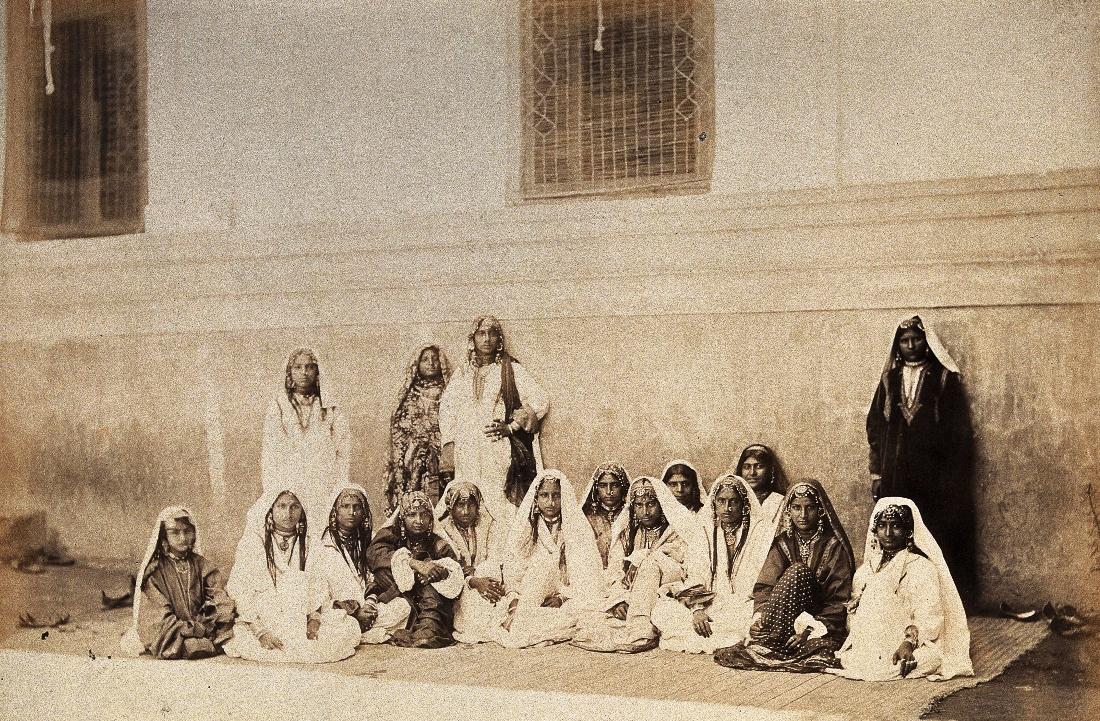
The menace of prostitution was prevalent in Kashmir since ancient times. Kalhana has accused almost every Hindu ruler of debauchery and immorality. References are found about several rulers that, besides indulging in debauchery, made daughters of their ministers and often their family’s beautiful girls a target of lust. Hindu rulers, by providing religious protection to the musical gatherings, legitimized the means of their lust. They formally used to provide patronage to the prostitutes who not only engaged in prostitution but also worked as spies for the King.
In the Sultanate period, there is a mention of a prostitute named “Yavan Mech.” This woman was dispatched with a mission to lure Hazrat Noor Ud Din Reshi through her enchanting beauty. [Note: Eventually, Sheikh’s gaze bestowed upon her and She renounced worldly affairs and dedicated the remainder of her life to the love and devotion of God. Previously known as Shang Bibi, her story is chronicled in the “Rishi Nama,” although the exact location of her tomb remains unknown. However, it is believed to be situated in close proximity to the revered shrine of the Sheikh.]
The Mughal provincial rulers provided legal protection to the gatherings of pleasure and joy, and the Pathans were known for their sexual relationships with women. However, they also popularized the cult of “dancing boys”. According to some opinions, the song “Bacha Nagma” is a vivid memory of homosexuality in Kashmir. A boy, not yet an adult, is made to dance wearing woman’s clothes. “Hafiz Nagma” is another way in which, along with musical instruments, sensual dances of youth were displayed in royal courts.
Sufi poetry, on the other hand, remained associated with religious beliefs. The classical singing of Kashmir is influenced by Muslim rule and came from Iran and Khurasan. These singers used to adorn the gatherings of the ecstatic. Despite that, the Pathaan provincial rulers, by incorporating women’s dances and songs into Sufi gatherings, degraded this sacred art. Nevertheless, figures like “Hafiza Nagma” were associated with a particular class and did not interest the common people. Neither Hindus nor Muslims of noble descent preferred to attend such gatherings.
Among the Pathan rulers, Amir Khan Jawan Sher was the first governor who organized a band of women dancers on government expenses. He used to arrange dance gatherings in the Gardens located by the riverbanks, and this way sensual dance gatherings found royal patronage. In those days, these dancers had to undergo excellent training in the art of music and dance. They were taught all the skills so that they could lure the distinguished guests who came from outside.
Sikh governors also kept this tradition alive. Musicians were trained rigorously to impress the influential personalities visiting the Royal court in Kashmir. Besides that the Sikh rulers also recruited a heavy army of young boatwomen. Many intricate bracelets were worn by these rowing women so that the tinkling sound of the bracelets could be heard during rowing, adding to the delight of the esteemed guests.
March 1846 witnessed the most infamous incident in history, where the British left Kashmir at the mercy of Gulab Singh.
The Dogras, in exchange for 75 lakh Nanak Shahi rupees, had purchased all the regions between the rivers Sindh and Ravi. However, Gulab Singh, hailing from Jammu and being a Hindu by belief, considered only and only the Kashmiri Muslims as slaves. These rulers not only heavily taxed Kashmiri farmers, weavers, and other classes but also imposed a large army of government officials, and spies on them, which, like parasites, dominated the common people every moment and every hour.
On one side, 4/5 of the produce was taken in various forms of taxes by the government, while on the other side, the remaining portion was seized by the government officials. In this way, whatever produce there was, the government and its agents would forcibly seize. Apart from this, young girls were being sold and this too way the means of income generation for the royal court. However, Kashmiri Pandits and Pirzadas were exempted from this practice. Gulab Singh had given legal protection to prostitution and running brothels. The purpose was only that in the form of taxes and licenses, funds should officially accumulate in the government treasury.
It’s strange that the Dogra rulers have officially recorded the income obtained from the buying and selling of girls in their government documents, whereas any conscious person usually hides such income so as not to face shame. At the same time this reveals a glimpse of the hatred and revenge of the Dogra rulers against the Kashmiri Muslims. It is evident that they had bought the Kashmiri Muslims like animals and had a complete sense that buying slaves and dealing with their daughters in any way is permissible. Gulab Singh had enacted such laws by virtue of which prostitution had become a government regulated business.
They had the official permission to run brothels, and the government had the right to confiscate all the properties in case of the death of any prostitute. The prostitute had no right to close her business or set up a household with any man without government permission. If anyone attempted to escape, they were hunted down and forcefully brought back to their quarters. The rulers had given complete instructions that every penny the prostitute earned through her activities to the Maharaja. Half of whatever amount she earned through prostitution must be compulsorily deposited in the government treasury because a prostitute in Kashmir was, in fact, Gulab Singh’s concubine, assigned the task of earning money and increasing government revenue by selling her body.
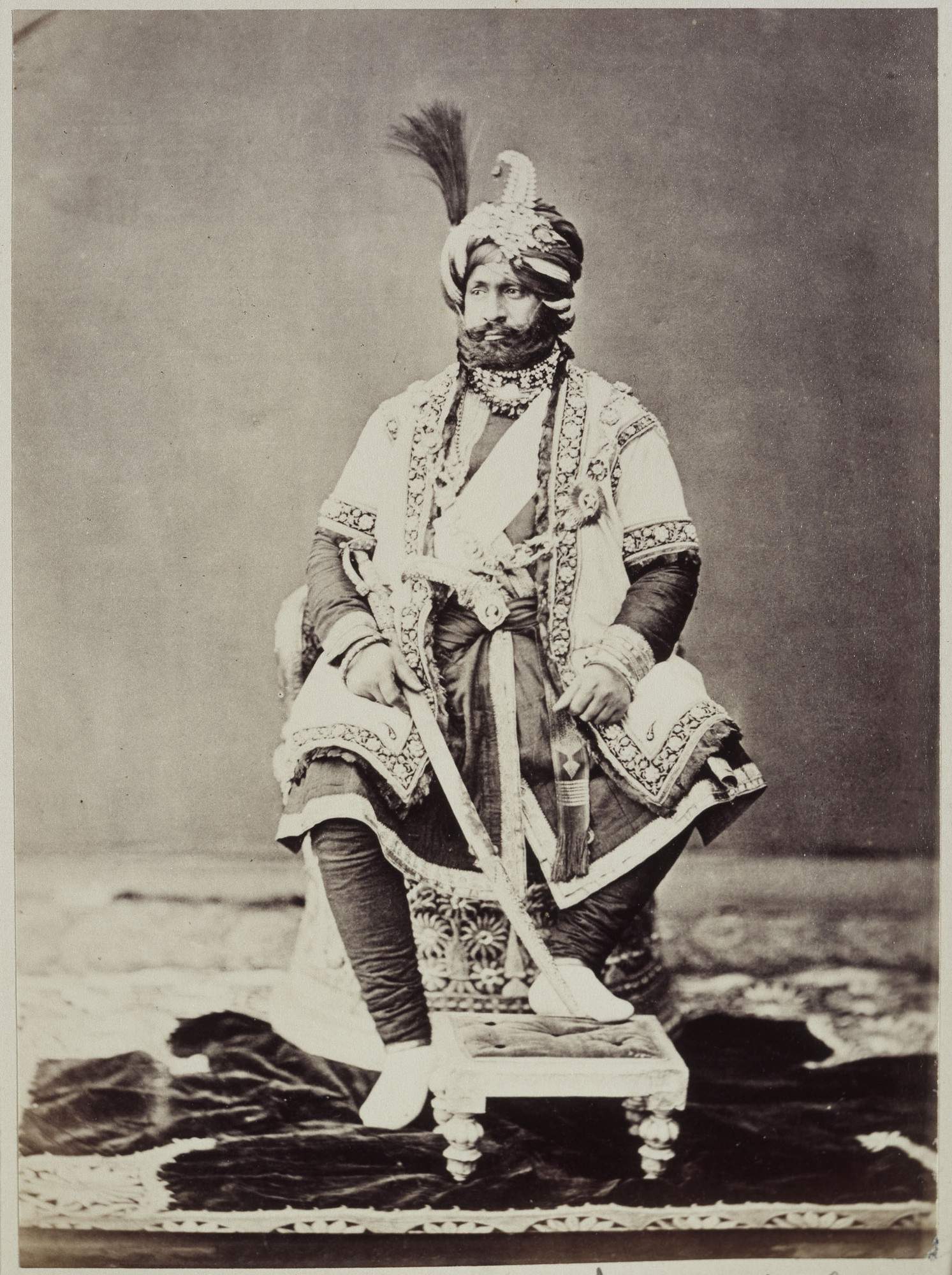
Maharaja Ranbir Singh. Image Courtesy- Wikipedia
According to the laws of Ranbir Singh, each girl could be bought or sold for 103 silver rupees, and the authorized amount had to be collected in the government treasury by making the girl engage in prostitution. Once the license was issued, it was necessary for each prostitute to deposit 100 silver rupees as an annual tax, and this tax had to be paid annually without fail. In case of failure, a penalty or imprisonment could be imposed on the brothel keeper. If a prostitute wanted to leave her trade, she had to submit a formal request and pay 500 silver rupees as a security deposit, and she was not allowed to leave the profession until she paid this amount. Brokers were allowed to enter home of any Muslim girl in any area by liking her, and they could enter her into the government brothel. The treatment of women in the brothels is illustrated by an example given by Sir William Muir:
Once, Colonel Mahan Singh received information that one of his concubines (originally a poor farmer’s wife) had developed relations with her own husband. Mahan Singh, upon hearing this, became furious and ordered that the girl be thrown into boiling water. Consequently, as the boiling water began to scald the girl’s skin, her cries and pleas became unbearable for the Maharaja’s soldiers. Unable to bear her screams, they stuffed their fingers into their ears and left the room. Later, to relieve the girl from the agony of being immersed in boiling water, her husband, unable to bear her suffering, poisoned her.
The estimate of the consolidated revenue from the brothel trade indicates that in 1880, 25% of the total income was derived from it. In 1880, there were about 18715 prostitutes in Srinagar. While the government collected a substantial amount in taxes from these girls, there was absolutely no attention paid to their health and well-being. According to an estimate from 1880, in Srinagar’s Mission Hospital alone, more than two and a half thousand women were admitted whose health had deteriorated due to sexual exploitation. In Srinagar city, this practice had spread to every neighborhood and locality. However, two major areas had become its strongholds, and it was especially notorious there. These areas were Maisuma and Tashwan.
It is said that a greedy Kashmiri Pandit named Sona Bahro brought these prostitutes from various places and settled them in Maisuma and Tashwan. In the Maisuma area, boat women were mainly involved in the trade. These women used to attract government guests and entertain them, and privately, they engaged in flesh trade. Some of the beautifully constructed houses made for these prostitutes still exist in Maisuma and are remarkable for their architectural and decorative aspects. Despite the passage of time, they are still considered memorable. Among them, there are specially designed halls. It is famous that beautiful girls were made to sit in those corridors so that they could attract the attention of passers-by. Kashmir is not only famous for its natural beauty but also for the beauty of its people, especially women, which is exemplary throughout the subcontinent. A European tourist once said:
Many women are handsome enough to induce a man to exclaim, as did the Assyrian soldiers, why they beheld the beauty of Judath, who would despise these people, that have among them such women… They are gifted with a style of figure which would entitle them to the appellation of fine or handsome women in European society. (G.T. Vigne)
The natural beauty and adornment of Kashmiri girls compelled them not only to engage in their profession in their homeland but also to be sent, often at a young age, to regions like Punjab, Delhi, and the border areas, where they were sold by traffickers. Saadat Hasan Manto’s stories written around the time of the partition of India bear witness to the fact that there was a strong demand for Kashmiri girls in the brothels. These girls were mostly from poor backgrounds or those who had been abducted.
Regrettably, Muslim religious leaders and educated people from the Hindu community, who could have raised their voices against this heinous trade, remained silent. It is clear why they did not take any action. Both communities were exempt from different types of taxes and forced labor. They were being provided grants by the Dogras and owned properties given to them by Dogra rulers only. In these circumstances, only one person in the entire valley deserves credit, namely Muhammad Subhan Hajam, who raised his voice against prostitution.
Muhammad Subhan was born in a poor family in Maisuma in 1910. His father was a barber who had come from somewhere and settled in this area. Muhammad Subhan spent his childhood playing in the alleys and lanes around the brothels in Maisuma, and according to Tyndale Biscoe:
“….was continually disturbed by the cries of anguish from the unfortunates recently forced into this cruel life, many of them quite young, who had been sold by their relations under the pretence that marriages had been arranged for them.”
Cecil Tyndale-Biscoe – Image Courtesy Wikipedia
In 1924, the first pamphlet against the prostitution in Srinagar was published by Subhan Hjam, revealing details of the injustices perpetrated by the officials of the Maharaja and the pimps. At that time, Hajam was only 14 years old. He not only confronted the authorities but also encouraged the residents of his neighborhood and respectable citizens of the city to oppose the surging moral degradation in the society. Gradually, children from the Maisuma area began to be influenced by Muhammad Subhan’s activities, and they began to openly rebel against the oppression.
He tirelessly would keep a watch over the area and the persons who would visit the brothels were being counseled by him to abandon this nefarious habit.
Master Mohammad Siddiq a gifted student who, being a Biscoe Boy, was influenced by Sir Tyndal Biscoe and used to counsel people under his influence. On the other hand, Subhan Hajam himself used to form small bands of children and go around the streets and raise slogans against the pimps.
Hajam was certainly witty, so he meticulously crafted phrases and jokes against the pimps, making people laugh and ridiculing the traffickers. Initially, Subhan Hajjam’s agitation remained peaceful. But as the movement grew and traffic in the brothels came to a standstill, and the income of the pimps began to decrease, the police, revenue department, and even the Maharaja himself began to worry. Consequently, they first started crushing Muhammad Subhan and his supporters with the help of goons. However, his agitation had now become the movement. Young and old and even women had started to hit the streets against the pervasive moral degradation in the Kashmir society. Therefore, the government began to feel somewhat helpless and started framing false cases against Subhan Hajjam.
The cases against him were somewhat like this:
- Subhan Hajam is responsible for disturbing the peace.
- He is a rebel who has tarnished the reputation of the city’s nobility.
- He is responsible for instilling distrust among the common people against the police and the government.
- He is guilty of causing loss to the Public Purse.
- He solicits bribes from bands of singers and engages in hooliganism.
Most of the cases brought against him were military proceedings, in which false testimonies were entered by the police. However, due to the determination and actions of the Maisuma residents, especially women, the police were always reluctant to take action against Hajam. Not only were Muslims from the area at his defense, but sympathizers like Sir Tyndal Biscoe, District Magistrate Raja Afzal Khan, and Hindus, Sikhs, , and local workers from the area were among his supporters. These people also supported him financially and morally.
In one of the posters, Subhan Hajam is quoted:
“I do not want to single out and ridicule that pocket of the city where reports related to prostitution emerge. But instead, the respected persons of this area come to me and provide their statements with their fingerprints and signatures, which I deliver to the authorities. However, the government officials make false allegations against me. The narrow-minded and malicious officers, for personal motives, incite the respectable persons against me, and thus, the peaceful atmosphere of the area is disturbed.”
By ‘respected persons’, Subhan Hajam does not only mean the feudal ruling class, but also the government officials, senior police officers, and religious and political leaders who did not pay any attention to ending the menace of prostitution in the valley. Religious leaders used to consider it a grave sin to even look towards the brothels and talk about them in their sermons. In case they could have interfered, there was a fear looming inside their minds that they would be punished with official reprimands. As far as political leaders were concerned, they had no interest in such matters.
Subhan Hajam perhaps writes for this reason:
“My movement is not political. I am neither a follower of Maulvi Yusuf Shah nor an opponent of Hazrat Sheikh. I don’t consider Sheikh Sahib an angel but a sincere young man. I have no intention of discussing what Mirzaaies speak about him. I am glad that he has launched a movement in the interest of the Muslim nation in the state, which is called the Muslim Conference. But remember that uproarious notes and articles in newspapers and national unity cannot be established through fiery speeches.”
Hajam believed in action and continued to oversee the brothels every morning and evening, and he would list all the respected gentlemen who visited those places in his diary. It is surprising that his list also included the names of those people who were known as the brave ‘mujahideen’ of their time, the benefactors of the nation, and the dignitaries. He not only sought cooperation from Muslims in Kashmir in the fight against prostitution but also sought help from the Muslim immigrants, government officers, Kashmiri Pandits, residents of Jammu, and Punjabis.
One of his pamphlets is as follows:
“My recommendation is that the government should approve a committee consisting of a few members whose job it should be to sit at the entrances of the red-light areas and note down the name of every person who enters these areas and their names should be published in the official gazette. I will advise the responsible officer of the police department to compile a list of all hidden and overt prostitutes in Kashmir and send a copy of it to the relevant officers in Lahore, Peshawar, Mumbai, Amritsar, and Karachi along with their photos.”
The government, in response to these appeals, only passed an Anti-Prostitution Act in 1934 and that’s it. But the real efforts to eradicate this vice from the city are witnessed through the persistent posters and booklets of Subhan Hajam. These booklets continued to be distributed even after independence and are evidence of the proliferation of this vice.
A few quotes from them are as follows:
To the District Magistrate! On behalf of the people of Buchawar:-
It is lamentable that despite the enforcement of the Anti-Prostitution Act, the notorious prostitutes of the city are still safe. These people are running their business openly. We are not only receiving threats from the government but also from the prostitutes. Threats are coming from the president of the Prostitutes Association namely Ismail Jaalsaz. Those who are working under his command are, Zoni, Mukhti, Azizi.
Through NambarDar
Also known as DewLasha
To government and the people,
The Plea of Hajam
“The menace of prostitution will be eradicated from my city. It is regrettable however that the police did not help me. Some courts are also not fulfilling their duties properly. People from Jammu have reported that there is a brothel operating in the Baba Jiwan Shah neighborhood, where a newspaper vendor was caught engaging in an immoral act.”
To Police Officer, Ward Number 1, Srinagar City:
Several vulnerable women in Srinagar City are entering the prestigious areas with great cunning and committing vice there. It is reported in this regard that a person namely Sabhan Gaan (Pimp), is running a brothel in the Drugjan neighborhood, where women named Khuli, Rahati, and Khati are engaging in immoral activities by changing their disguise.
Regarding the Drugjan area, it is known that two residents named Lashe Laave and Muhammad Butta actually work in the Golf course and are in no way associated with prostitution business. Sabhan Gaan has tried to implicate them by bribing the police.
———————
A woman named Mani resides in the Mandar Bagh area. His mother Hani also stays with her. Mani had an illicit relationship with a Kashmiri Pandit for 9 years. Now another Pandit has been employed for prostitution, who bears their expenses. If the Pandit does not mend his ways, I will make his name Public.
——————
In Mandar Bagh area, a few days ago, a woman was caught by Gulab Ghar wani engaging in vice. But the police let her go. Ahad Gaan (pimp) helped her out.
This is to inform one and all that unscrupulous individuals from outside are residing in the area of Maisuma and are running brothels there.. Among them, a woman named Gula Bo is prominent.
Besides combating immorality, Subhan Hajam was also engaged in other social welfare activities. He had a unique perspective on political movements, viewing them from his own angle, the same angle from which ordinary people perceived them. He writes on a poster:
“Those who blame Muslims from Punjab for the disgrace of Kashmir should be ashamed of themselves. They should stop promoting the desecration of the Mandir Shankar Aachariya, Kamla’s tale, illegal seizures of mosques, the madness of imposing Hindi in schools against the Urdu language, and enforcing such laws. They should be ashamed about the desecration of the Quran and other reprehensible acts. It is the duty of Muslims to protect the sacred sites of Hinduism, and it is the duty of Hindus to respect sacred books of Muslims, and the Prophet of Islam (saw). The local newspaper, Martand, does not respect its Muslim brothers and publishes things every day that could be a cause of unrest and corruption among the Maharaja’s subjects.. I will also advise Muslim newspapers to proceed with caution.”
Mohammad Subhan advised Kashmiri men to wear turbans and leave the shimlas, and in this regard, the names of some prominent people at that time were also published in the poster who had given up this trend. Among them, Ghulam Muhammad Sadiq, Maulvi Anwar Shah, Manshi Shahabuddin, Bakshi Ghulam Muhammad, and Khwaja Ahmed Allah were named.
In Kashmir, it was a tradition to include torchbearers in wedding processions, and these people were also given food from the left over trays of guests invited to weddings. Subhan Hajam also published a pamphlet against this trend. Moreover, he raised a strong voice against the clerics (whom he addressed as mushtanday) who were busy looting pilgrims while sitting on the shrine doors and windows. In his writings, he mentioned the heaps of garbage and the shortage of toilets in the city. His struggle was also against the gambling dens, prostitutes, women bakers, and vegetable vendors.
In the year 1957, when the construction of the Badshah Bridge and the surrounding buildings began, Subhan Hajam’s shop was also demolished as part of that construction project. Those who had shops, photography studios, or confectioneries in this area became the owners of large establishments around Lal Chowk and the adjacent areas. However, Subhan Hajam’s only son still earns a living by operating a makeshift salon on a footpath near Polo Ground, Srinagar. Subhan Hajam is one of the brave souls of this land who, despite numerous sacrifices, did not receive any financial assistance from the government. Meanwhile, in our country, individuals with minimal sacrifices became the owners of large estates, rose to public leadership positions, and even took charge as rulers of the nation.

On November 25, 1962, Subhan Hajam fell ill due to asthma and passed away. As per its unfortunate tradition, our ungrateful nation has erased his memory from the annals of this great land.
Note: This Article originally written by Mohammad Yousuf Taing has been translated into English by Umar Manzoor Shah. Can be reached at srinagar87@gmail.com
 Kashmir Frame