Written by Nishat Ansari
Translated into English by Umar Manzoor Shah
Nestled amidst the towering, rugged, and undulating mountains on both sides of the picturesque Vitasta river in the far west of the Kashmir Valley, the historical fortress of Baramulla continues to echo its millennia-old tale even today. This legendary stronghold of Kashmir, known as the paradise’s landmark, stands at an elevation of five thousand feet above sea level. It is the same historical site where, thousands of years ago, Kashyap Rishi, in order to release the stagnant waters for the settlement, carved through the mountains and rocks with his divine prowess, drying up the mythical Mahalali Lake and making it habitable for the people. Numerous stories about this event still remain an integral part of Kashmiri folklore. This beautiful and charming fortress of the valley has witnessed numerous civilizations since the moment human life sprouted in the basin-like lap of Baramulla. Situated between Punjab and the Kashmir Valley, and being in close proximity to the Gates of Delhi, this region has always been profoundly influenced by every intellectual, cultural, political, social, and religious movement emanating from beyond Kashmir. Therefore, even before the advent of Islam, the entire area surrounding Baramulla and its surroundings, which on one side included Oshkura (Dushkura), Kanspurah (Kanshikpur), and Dalena, the historic mountain realms of Raja Taing, and on the other side, Gusan Taing and the final resting place of Syed Muhammad Janbaz Wali (Khanpura), served as the center for Hindus and Buddhists alike. Even today, there are several pilgrimage sites here that serve as evidence of the presence of Buddhism in the region. Within and outside these pilgrimage sites, one can find large, intricately carved stones that bear witness to the existence of Buddhism in the area during that era.
However, with the advent of Islam and the propagation and dissemination of Islamic teachings in Kashmir, the people of this region and its surrounding areas became Muslims.
Post this, the revered figures, scholars, and virtuous individuals around Baramulla played a significant role in the promotion and dissemination of Islam. Among them, the ancestors of Khwaja Abdul Samad Kakroo Muqbil also left their prominent mark in history by contributing to the promotion of religious and reformative services.
Even after passing over two and a half centuries, the descendants of the Kakroo family are still revered with respect and honor throughout Baramulla. Therefore, even today, about two hundred and thirty years ago, Khwaja Wali, who belonged to the same Kakroo family, is remembered for dedicating his entire life to social and religious endeavors.
Regardless of religious affiliations, it was Khwaja Wali Joo Kakroo who, with his dedication, oversaw the construction of the dome of the Khanaqah Ziarat in Khanpura (Baramula). Mention of this can still be found on a rectangular wooden plank at the shrine.

Shrine of Saint, Syed Muhammad Janbaz Wali (RA)
After Khwaja Wali Joo Kakro”, his son Khwaja Ali Joo Kakroo took on the responsibilities of leading the Kakroo family about one hundred and sixty years ago following his father’s demise. He was father of the great son of soil- Abdul Samad Kakroo. It’s worth mentioning here that the inclusion of the word “Joo” along with the word “Kakroo” is a clear indication that either the influence of Israeli Jews in Kashmir remained at some point, or it was due to their domination—hence, in Kashmiri society, the addition of “Joo” to the names of esteemed personalities was considered a mark of respect.
Typically, the term “Joo” was associated only with those individuals who were either wealthy or engaged in some kind of business. However, Ali Joo Kakroo was neither a shopkeeper nor a merchant. Indeed, Khwaja Ali Joo Kakroo was not only a wealthy individual but also held a high position in society due to his unique generosity, piety, and asceticism. His philanthropy and compassion were so profound that his acts of charity and assistance to the needy were carried out in such a discreet manner that often no one would be aware of it.
Although Ali Joo Kakroo was a prominent figure in the family and the renowned personality of Baramullla, he always preserved himself from the stains and blemishes of worldly affairs. The matters and actions that provided Ali Joo Kakroo with spiritual tranquility were his service to religious scholars and elders, their heartwarming hospitality, and the propagation of Islam. For the attainment of this spiritual tranquility, Ali Joo Kakroo entered into the discipleship of Hazrat Shah Muhammad Ghous and began to honor the esteemed elders associated with the Naqshbandi order.
This was the essence of his life as well. Ali Joo Kakroo became a disciple of a mystic in Kashmir, Shah Muhammad, who later moved to Lahore. There, Allah’s true love overwhelmed him to such an extent that he became absorbed in the shrine of Shah Muhammad Ghous. Ali Joo Kakroo was Shah Muhammad at that time. It was he who performed his last religious rites. Later, he renovated the shrine of his revered mentor Hazrat Shah Muhammad Ghous that was in dilapidated condition at that time.
The main gate of Shah Muhammad Ghous’s shrine still bears inscriptions visible today; the name of Ali Joo Kakroo and the mention of his important contribution are recorded on it.
Khwaja Ali Joo Kakroo’s son Khwaja Abdul Samad Kakroo, whose birth year is estimated around 1834, became his successor after his father’s demise. He took charge of maintaining his paternal inheritance and devoted full attention to other family estates and business affairs. Besides following in his father’s footsteps, he embellished his own legacy with remarkable deeds that earned him recognition in society. Indeed, Khwaja Abdul Samad Kakroo outshone his father, thus elevating the stature of the Kakroo family in Baramulla to new heights.
In this context, Pakistani writer Kaleem Akhtar expressed in his article “Iqbal and AbdulSamad Kakroo”:
“It is a fact that after his father’s death, Abdul Samad Kakroo expanded the family’s connections and continued the tradition of generosity, following in his father’s footsteps to such an extent that he sponsored the pilgrimage to Mecca for many people.”
Renowned historian Munshi Mohammad-ud- din Fouq, in his work “Tarikh-i-Aqwam-i-Kashmir,” provides a glimpse of Khwaja Abdul Samad’s prominence:
“The Kakroo family of Baramulla reached great heights at one point in time. The final glimpse of this ascent has also been observed by me. Khwaja Abdul Samad Kakroo’s palatial house, the guesthouse garden, the bungalows in Srinagar, the magnificent residences, and gatherings [around] still linger before my eyes. His circle of associates extends not only across Kashmir but also to Punjab, India, and Burma.”
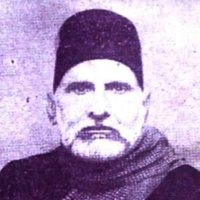
File photo of Munshi Mohammad Deen Fauq
In comparison to his father and grandfather, Abdul Samad Kakroo’s rapid rise to fame and his position among the distinguished personalities outside the Kashmir Valley can be attributed primarily to his intellectual prowess and eloquence, in addition to his philanthropy. Despite his family’s prestigious status, he was a natural poet, a man of refined taste, an esteemed writer, and a humanitarian. Thus, during the time when he surpassed the prominence of the Kakroo family, he was a formidable figure for the entire Kashmir region.
During those days, Kashmir faced severe trials, with farmers and laborers in the fields suffering various injustices at the hands of the government. Throughout India, a strong movement was underway against the exploitation of laborers, echoing protests against their oppression. Influenced by this movement, Khwaja Abdul Samad Kakroo initiated a reform movement in Baramulla, gradually emerging as a leader of renown. History bears witness that when Maharaja Partap Singh imposed taxes on laborers and workers, protests against his actions erupted throughout the state. Abdul Samad Kakroo also initiated a vigorous movement against this. He was thus subjected to severe hardships by the Maharaja.. As a permanent member of the All-India Muslim Education Conference, he consistently highlighted the atrocities perpetrated by the government against Kashmiris during every conference in which he participated.
In the year 1906, during the first conference of the All-India Muslim Educational Conference held in Dhaka, Abdul Samad Kakro also participated. There, he presented a memorandum to Viceroy from the platform, drawing the attention of the British government towards Kashmir’s issues, and highlighted the grievances of the people. Through this conference, Abdul Samad Kakro’s relationships and friendly interactions extended beyond Kashmir with political, religious, and national figures. As an active member of the All-India Muslim Educational Conference and due to his association with the All-India Muslim League, Abdul Samad Kakro’s relations gradually strengthened with Allama Sir Muhammad Iqbal. When Abdul Samad’s son, Ghulam Hasan, passed away, it deeply affected Abdul Samad. Despite being a poet, he couldn’t find words to express his grief over this tragedy. Although estimating Khwaja Samad’s wounded emotions was challenging for an ordinary person, for Allama Iqbal, it was not an arduous task. Therefore, Allama addressed a moving elegy titled “Maam Pisar” towards Abdul Samad, which was published alongside a note by Sir Abdul Qadir in the July 1902 issue of the Risala-i-Makhzan.
ALLAMA Iqbal relaxing at the residence of his friend Nawab Zulfiqar Ali Khan who was the chairman of the Anjuman-i-Himayat-i-Islam, an organisation that aimed at promoting Islamic values through education and intellectual activities. | Photo: The Allama Iqbal Collection.
Our esteemed friend, Baramull’s Khawaja Abdul Samad Kakro, has recently experienced the sudden loss of his beloved and gifted son. Khawaja Sahib himself is a scholar and a lover of knowledge, renowned for his proficiency in the Persian language and known by his pen name Muqbil. However, this grief has cast a shadow over his cheerful disposition and lively spirit. Sir Muhammad Iqbal Sahib has penned an elegy on his behalf, which reads as follows:
The abode of darkness has become Samad’s dwelling:
The radiant sun has hidden itself.
Our garden has turned into a wilderness,
The traveler has set off on his journey home.
The melodious nightingale has flown away,
Leaving the garden desolate in autumn’s embrace.
No longer does the spring bloom in the gardens of Kashmir,
For the hidden flowers have vanished from sight.
The caravan has departed, and I am left on the path,
Lost in the dust kicked up by the caravan’s departure.
Tears of blood flow from my eyes,
Testing the limits of my patience.
A formidable and relentless enemy,
The sky is filled with smoke and sighs.
My garden has become a desert,
The season of grief has brought such tyranny.
Such has become my habit in sorrow,
That grief has become my solace.
Why shouldn’t the nightingale lament in separation?
For the enchanting flowers has bloomed in paradise (away from her).
The crimson hue in the tears of twilight,
Has turned the adversary into a beloved winebearer.
The shelter I built with trembling hands,
Has now become a target for lightning strikes.
How can I restrain, O companions,
When every tear becomes a raging storm?
Strange is this separation for Ghulam Hassan,
For even living has become burdensome.
The heavens have bestowed upon him the garden’s grief,
And Muqbil has become entirely consumed.
In this context, Maulana Ghulam Rasool Mehar writes:
“Khawaja Abdul Samad Kakroo actively participated in pro-freedom activities. He would attend meetings and generously contribute funds. He also delivered speeches himself and always remained at the forefront in encouraging new poets and speakers. He had immense love for Iqbal. Iqbal expressed his grief based on this relationship.

I first came across Dr. Sir Muhammad Iqbal’s composition, this elegy, twenty-one years ago in the book “Baqiyat-e-Iqbal.” At that time, Khawaja Sahab’s heir Khwaja Anayatullah Kakroo had no knowledge of this elegy being recited by Allama Iqbal concerning the tragic death of his elder brother Ghulam Hassan.
Even eminent personalities like Sir Abdul Qadir and Dr. Allama Iqbal have hailed Khawaja Abdul Samad Kakro for his poetic prowess. Despite this, Khawaja sahib couldn’t preserve his entire Persian and Urdu poetry, which is surprising. When I discussed this matter with Khawaja Anayatullah Kakroo (his son) ten years ago, it was revealed that when their father passed away, Khawaja Anayatullah was only one and a half years old, while his younger brother Habibullah Kakro, who has been living in Pakistan for the past 47 years, was born some two months after their father’s demise. Given these circumstances, it was not possible to preserve the treasure trove. Another reason Khawaja Anayatullah provided was that the deceased’s Urdu and Persian poetry was entrusted to his elder son, Ghulam Nabi Kakroo, who was born from the first wife of Khawaja Abdul Samad Kakro. Since there were disagreements among the brothers regarding the division of inheritance after their father’s demise, according to Khawaja Anayatullah, almost all the poetry lying with Ghulam Nabi Kakro was lost. However, Khawaja Abdul Samad Kakro himself had such zeal to preserve his poetry that he had many of his verses written by calligraphers on decorated wooden boards. I have personally seen such decorations twenty to twenty-five years ago at Khawaja Anayatullah’s place.
Apart from the reformist activities, the construction of the Jama Masjid by Abdul Samad Kokro was the second monumental aspect of his life. Until his time, there was no grand mosque (in suitable condition) in Baramulla. This scion of Baramulla renovated the grand mosque. The author of “Shabab-e- Kashmir” writes on page 119:
It is not known in which year the king built the Jama Masjid of Baramulla, but so many historians write that it was built during the reign of Budhshah. The Mosque was in a good condition. During the Chak dynasty, it began to deteriorate. During Mughal rule, it was renovated. During the Sikh period, Sheikh Mahiuddin Nazim-e-Kashmir repaired its roof. In 1303 AH, heavy rains damaged it. This state continued until 1312 AH. In 1313 AH, Khwaja Abdul Samad Kakroo renovated it.
During this period, the renovation of Srinagar’s Jama Masjid had taken place, and Khwaja Samad Kakroo contributed the highest amount of financial aid compared to other benefactors for its restoration. Khwaja Sahib actively established a religious seminary “Anjuman Islamia” under the leadership of Maulana Anwar Shah in Baramulla. Few people are aware that Khwaja Abdul Samad Kakroo held a prominent position among the founders of the Islamia High School in Srinagar. As long as he lived, he continued to provide financial assistance to the Jammu’s Anjuman Islamia. Similarly, he regularly participated in the annual meetings of the Sialkot Islamic Association (Punjab) and also contributed generously to this association.
Pakistani writer Kaleem Akhtar quotes that a few years ago, Khwaja Muhammad Abdullah, a close associate of Khwaja Abdul Samad, wrote a letter to him in which, among other things, it was also revealed that:
Apart from sternly following basic tenets of Islam, Khwaja Sahib would distribute the amount of charity and alms among orphans, widows, and needy relatives. He was particularly fond of arranging education and upbringing for orphaned children. He worked closely with Molvi Rasool Shah, the founder of Madrasa Nasratul Islam in Srinagar, and tirelessly collaborated with him in the construction, expansion, and financial support of the school, constantly devoting his valuable time to raising funds, and actively seeking financial aid from the government. He himself was also a great religious scholar apart from being a notable poet.
Abdul Samad Kakroo was highly respected among scholars of his time. He had a profound knowledge of Persian and Urdu languages. Although not fully fluent in English, he had some understanding of it. Being a poet, he composed poetry in both Persian and Urdu languages. Hence, he used “Muqbil” in Persian and ” Samad ” in Urdu as his pen names. Whenever someone from outside Kashmir who had a taste for literature, poetry, and knowledge visited, Muqbil would warmly welcome them, often hosting gatherings at his house. Every Thursday, he organized gatherings to celebrate Mavlud ( a gathering eulogizing the birth of the Prophet-saw) in one section of his house. Like his father, Khwaja Ali Kakroo, Khwaja sahib also had great respect for Maulana Anwar Shah, the Sheikh-ul-Hadith. Whenever Maulana would visit Baramulla, he would stay with Muqbil. It is said that when Maulana left his job at Delhi’s Madrasa Aminia and returned to Kashmir, several eminent people met him, and the foundation of Madrasa Faiz-e-Aam in Baramulla was laid by him. He also taught at the madrasa for some time. Muqbil also played his part in running the affairs of that Madrasa. This madrasa functioned from 1320 AH to 1323 AH. When this religious institution began to function with discipline, Maulana Anwar Shah decided to perform Hajj. Khwaja Abdul Samad got the hint that Maulana would fulfill the duties of teaching in Madinah Munawwarah and would not return from there. Therefore, Muqbil also accompanied Maulana to his pilgrimage to the Holy Kaaba. Muhammad Din Fuq writes in his book “Mashaheer-e-Kashmir” that in 1322 AH, Khwaja Abdul Samad set off on a journey to the Holy Kaaba. In this journey to Hijaz, scholars from Tripoli, Basra, Egypt, and other Islamic countries honored both of them. It has been mentioned already that Khwaja Abdul Samad was the member of Anjuman Himayat Islam Lahore. In this regard, referring to Kaleem Akhtar Syed Nazir Niazi, it is stated that Khwaja Sahib used to attend the annual conferences of the Anjuman-e Islamia Sialkot, provide financial assistance, and deliver speeches there. I have personally heard his speeches and poems.
Allama Iqbal was acquainted with Khwaja Sahib through the gatherings at Sialkot, as Khwaja Sahib was associated with Allama’s teacher, Maulvi Mir Hasan Sialkoti, and also with Allama’s father, Majid Sheikh Noor Muhammad. The honor of introducing Allama to the Kashmiri Muslim Association, Lahore belongs to Khwaja Sahib himself. When Allama was a student of BA, he was appointed the Secretary of the Kashmiri Muslim Association in Punjab. On this occasion, Allama also wrote a poem which was published in the “Kashmir Magazine” upon his return from London. The friendship between Khwaja Abdul Samad and Allama Iqbal began during these days, and such a relationship developed between them that Khwaja Sahib became a constant companion of Allama in his joys and sorrows.
Doctor Muhammad Abdullah Chughtai says: In the gatherings of the Islamic Support Association, when Allama recited his poetry, Khwaja Abdul Samad stood up and addressed the gathering. Iqbal is mine, give me some charity, I will give it to the association on his behalf.
Moving forward, Chughtai Sahib discusses in his books: In the beginning, prominent religious scholars like Maulana Syed Anwar Shah also taught at the Madrasa Faiz-e-‘Ilm School Baramulla. Later, he went to Deoband. One reason for Iqbal’s attachment to Deoband was likely the education and discipline provided by Khwaja Abdul Samad Kakroo. Through his affiliation with Maulana Syed Anwar Shah, Allama Iqbal was also associated with the latter. The connections of these two elders with the gatherings of the Anjuman-e-Himayat-e-Islam are evident from the records.
All the great literati and poets of India had personal connections and friendships with Muqbil. Hence, his associations were established with Sir Syed Ahmad Khan, Maulana Shibli Nomani, Maulana Altaf Hussain Hali, Hakim Ajmal Khan, Nawab Salim of Dhaka, Maulana Muhammad Ali Johar, Maulana Shaukat Ali, Maulana Zafar Ali, Nawab Mohsin-ul-Mulk, Nawab Waqar-ul-Mulk, Maulana Hasrat Mohani, Maulana Syed Mir Hasan, Allama Dr. Iqbal, and Dr. Ansari. In 1908, Nawab Mohsin-ul-Mulk passed away. According to Muhammad Din Fuq, when this news reached Srinagar, on the afternoon of October 21, Khan Sahib, Munshi Sirajuddin, Mir Munshi, Sadiq Ali Khan-Headmaster, Khwaja Abdul Samad Kakroo, and Maulvi Aqiqullah Sahib, Secretary of the Anjuman Nasr al-Islam Srinagar, organized a mourning session in the spacious courtyard of Islamia school. In this session, Fauq recited a poem, and here are a few of its verses:
Miṭ gayā jor falak se qaum kā muḥsin bhī āj
Āh phir gum kardah rāh ye kārvān hōne kō hai
Qaum kā khādim bhī thā, Sayyid bhī thā, Mahdī bhī thā
Rōnaq-i-bazm jahāñ zēb jinān hōne kō hai
Kyā batā.ēṅ ham ba-qaul-i-Dāġ kyā jātā rahā hai
Jo bharōstah thā hamēṅ wō āsrā jātā rahā
The nation’s benefactor has departed from the realm,
Alas! Once again, the lost path is the fate of this caravan.
He was nation’s servant, the Sayyid, the Mahdi,
The brilliance of world gathering has become paradise’s adornment.
What should we say? According to Daagh’s saying, what keeps diminishing?
The support that we trusted in keeps disappearing.
Whenever Fauq visited Kashmir, he would stay here with Khwaja Sahib. He has written many verses while staying in his house. Many times, he used to write poetry at Khwaja Sahib’s request.
On September 27, 1907, during a session that was held in Baramulla Sir Francis Young Resident of Kashmir and Maharaja Sir Partap Singh, all the nobles, ministers, and high-ranking officials were present. Inspired by Khwaja Abdul Samad Sahib, I wrote a few verses in the Maharaja’s mansion. In the same year, Fauq wrote these verses in Khwaja Sahib’s house:
Kashmir mein Islam ka kuch haal na pooch,
Ghaflat hai Musalmanon mein ghaflat se zyada.
Taleem se, tehzeeb se, tameez se nafrat,
Ulfat hai magar unko jahalat se zyada.
Do not inquire about the state of Islam in Kashmir,
There is more ignorance among Muslims than ignorance itself,
They have aversion to education, culture, and refinement,
They are more enticed by ignorance.
Khawaja Abdul Samad Kakroo’s affection for Allama Iqbal can be estimated from the 1903 annual session of the Anjuman Himayat-i Islam Lahore. In its third session, presided by Khan Ghulam Muhammad Khan (Sher-i-Mal Jammu and Kashmir), when Allama Iqbal recited his poem “Faryad-i Ummat” (The Cry of the Muslim Nation), Abdul Samad Kakroo presented Allama with an embroidered badge he had brought along with him from Kashmir. Dr. Muhammad Abdullah Chughtai mentions in his book “Iqbal ki Sahibat Mein” that I have seen Khawaja Sahib himself honoring Iqbal in the gathering. Kaleem Akhtar, quoting Syed Nazir Niazi, recounts that when Allama recited his famous poem “Shikwah” (The Complaint) in a session of the Anjuman Himayat-i Islam in 1911, Khawaja Sahib, who was present in the audience and was donning a precious Kashmiri shawl (Shahtoosh), stood up from his place and draped it over Iqbal’s shoulders. Overwhelmed with emotions, he also embraced Allama affectionately. Later, that Shahtoosh was auctioned right there in the gathering, and its price money was donated to the Anjuman. Allama’s father was also present in this historic gathering, witnessing the poetic grandeur of his son with his own eyes.
When Allama visited Kashmir in June 1921, at that time Abdul Samad Kakroo had passed away. For condolences, he visited Baramulla. However, Jagan Nath Azad in his Book ‘Iqbal and Kashmir’ has rejected any such incident.
It is however, a fact that in between the years 1902 and 1903, Allama Iqbal had visited Baramulla to offer condolences for the sudden death of Abdul Samad Kukroo’s young son, Ghulam Hasan. Jagan Nath Azad does not agree with this incident as well.
I had written a letter to Mr. Azad before the publication of his book “Iqbal and Kashmir”. I had mentioned:
“Khawaja Abdul Samad Kakroo had built a magnificent house in Dal Lake, which still stands with its grandeur and elegance. It is possible that you must have yourself seen that place. It is said that when Allama Iqbal came to Kashmir, he became a guest of Khwaja sahb and resided in the same house. From there he went to see the Lolab valley.”
Referring to my letter, Jagan Nath Azad has mentioned in his book “Iqbal and Kashmir” that though he has seen that house built in the middle of the Lake, he does not agree with this incident.
I would like to disagree here again with Mr. Azad and draw his attention to this particular point that the relationship between Allama Iqbal and Khwaja Abdul Samad Kakroo was like those of two brothers. Therefore, how was it possible for Allama to visit Kashmir and not be a guest of Khawaja Sahib or not set foot on his estate? I would also argue with certainty that when Allama visited Kashmir for the last time in 1921, he stayed at the house located in Dal Lake, where Khwaja Anayatullah Kakroo’s son, Mr. Bashir Ahmad, nowadays, runs a hotel during summer season.
Allama Iqbal has once mentioned about his dear friend:
Khawaja Khwajagan Samad Kukro
Aan ke dārad qiyām dar Kashmīr
The Noble of the Nobles namely Samad Kakroo,
The one who resides in Kashmir
At the age of 80, in July 1919, Khwaja Abdul Samad passed away. However, it is regrettable that the words of a powerful poet like Khwaja sahib could not be preserved, nor have we been able to derive any benefit from them. Nevertheless, after considerable effort, his son Khwaja Anayatullah Kakroo, published two booklets titled “Iqbal and Khwaja Abdul Samad Kakroo” and “Barg Sabz,” fulfilling the responsibility of illuminating the life of his venerable father and the poetry for those who admire him.
May that humble man rest in peace.
Note: Author can be reached at srinagar87@gmail.com
 Kashmir Frame